Blog · · 6min read
Online booking vs the phone: how many calls it saves a small salon
A calculation with small numbers: how many calls a day are about appointments, how long they take, how many get missed with your hands busy, and which share of clients will keep phoning anyway.
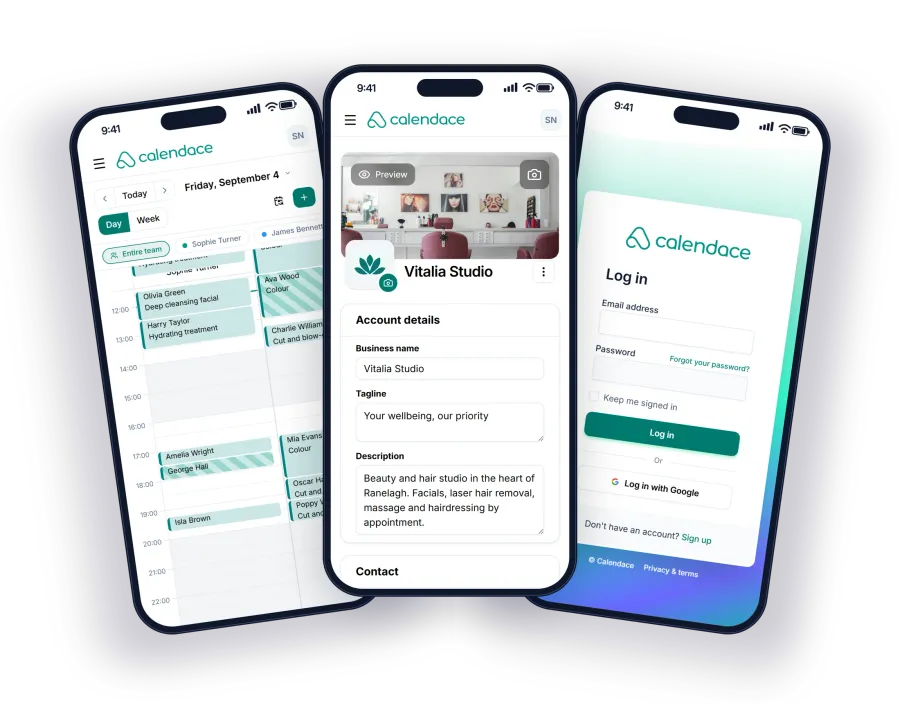
In a small salon the phone isn’t answered by a receptionist. It’s answered by whoever has their hands free, which is often nobody. It rings while you are applying colour, while you are taking payment, while you are talking to the client in the chair. And every call, even a two-minute one, is two minutes of stopping, drying your hands, writing something down and picking back up.
The question anyone asks before setting up a booking page is how much of that it really saves. Not “a lot”: how much. Let’s do the maths with an invented but plausible salon, and then look at which part of the phone doesn’t go away.
The salon in the calculation
Take a salon with two professionals, open 8 hours a day, 24 days a month. Around 20 appointments a day, average ticket €25. And say it gets 25 calls a day about appointments: booking one, moving it, cancelling it, asking whether there’s anything on Saturday, checking what time it was.
These are example figures. If you run a salon, swap in your own: the exercise is far more useful with your numbers than ours. One day tallying calls with a mark on a sheet of paper gives you the real figure.
How much time those calls take
A call to book an appointment doesn’t take a minute. It takes as long as the client needs to say what they want, you to look at the diary, offer two options, neither works, offer two more, write down the name and number, and repeat the time so they can write it down too. Say 2 minutes on average, counting the short “what time was it?” ones and the long “what about Friday afternoon?” ones.
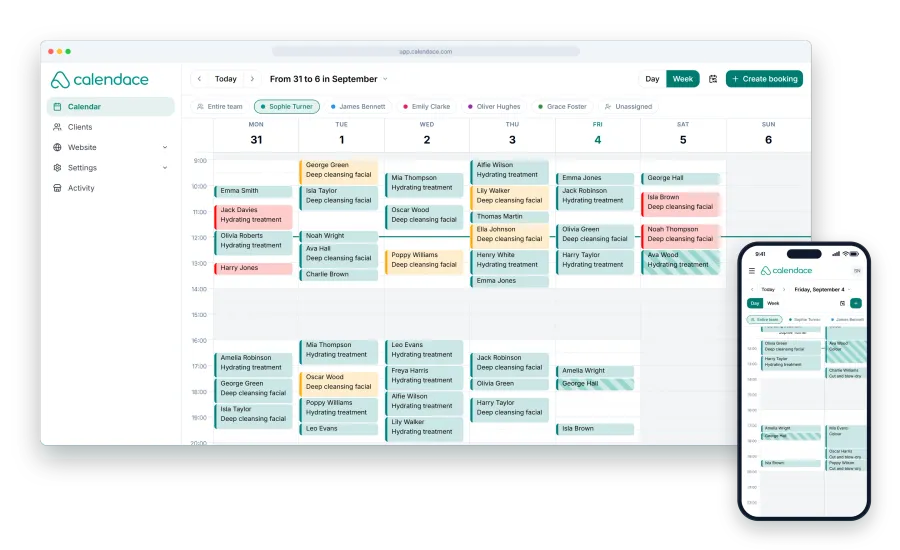
25 calls at 2 minutes is 50 minutes a day. Over a month, 20 hours. That’s half a working week of someone doing nothing but answering the phone. In a salon where that time comes from the same person who cuts hair, it isn’t 20 hours of receptionist: it’s 20 hours of interrupted stylist.
And the interruption costs more than the two minutes. Stopping a job and picking it back up has a price in attention that doesn’t show in the sum but shows in the result, and in the client sitting there with the dye on.
The calls that don’t get answered
This is the number almost nobody works out, and it’s the one that weighs most.
With your hands busy, a share of calls goes unanswered. Say one in four: 6 a day. Some of those ring back later. Others don’t: they try the salon on the next street, or leave it for another day and that day never comes. Say 2 of the 6 missed calls a day were appointments that went elsewhere.
2 appointments at €25 over 24 days is €1,200 a month that doesn’t come in, not for lack of clients, but because nobody could pick up at that moment. Even if the estimate is only half right, that’s €600.
This is the real argument for a booking page. It isn’t the time it saves: it’s that the client who wants to book at nine in the evening, or while your hands are in the basin, can.
Which share of calls moves to the page
Not all of them, not by a long way. With the page properly placed (link on your Google listing, on Instagram, QR code at the desk and on the door), a large share of bookings from repeat clients ends up going through it within a few months. Say that after six months 60% of appointments are booked online.
For the salon in the calculation: 25 calls a day drop to around 10. That’s 30 minutes a day recovered, 12 hours a month. Missed calls drop in the same proportion, and the ones still missed weigh less, because the client whose call you can’t take has another door: the link they already know.
There’s a part that never showed up in the calls: the bookings that didn’t exist before. The ones made while the salon is closed. Say one in five online bookings comes in outside opening hours, at night or on a Sunday. Those are appointments that would never have been attempted by phone.
The ones who will keep calling
It’s worth being honest here, because the usual mistake isn’t setting up the page, it’s assuming the phone disappears.
These will keep calling:
- Clients of many years. They’ve been phoning for fifteen years and you’ve been picking up for fifteen years. No page changes that, and it doesn’t need to.
- Those who don’t know what to ask for. “I want to do something with my colour but I’m not sure what.” That call is a consultation, not a booking, and it’s valuable. The page doesn’t replace it.
- Those who want today. A share of people ringing for the same day would rather hear “yes, come at five” than look at a screen. In a barbershop with lots of walk-ins, that’s half the diary.
- Those booking for others. The mother booking three children, someone booking for their partner.
Over time that group shrinks, mostly because clients who start booking online discover they can do it at eleven at night and never ring again. But a share stays, and it’s better to count it: say between a quarter and a third of bookings, depending on the type of salon and the age of the clientele.
The full calculation
Back to the example salon, six months in:
- 12 hours a month less on the phone for someone who also cuts hair.
- Between €600 and €1,200 a month less lost to calls nobody could answer.
- Around 10 calls a day that remain, and now get answered better because there are fewer of them.
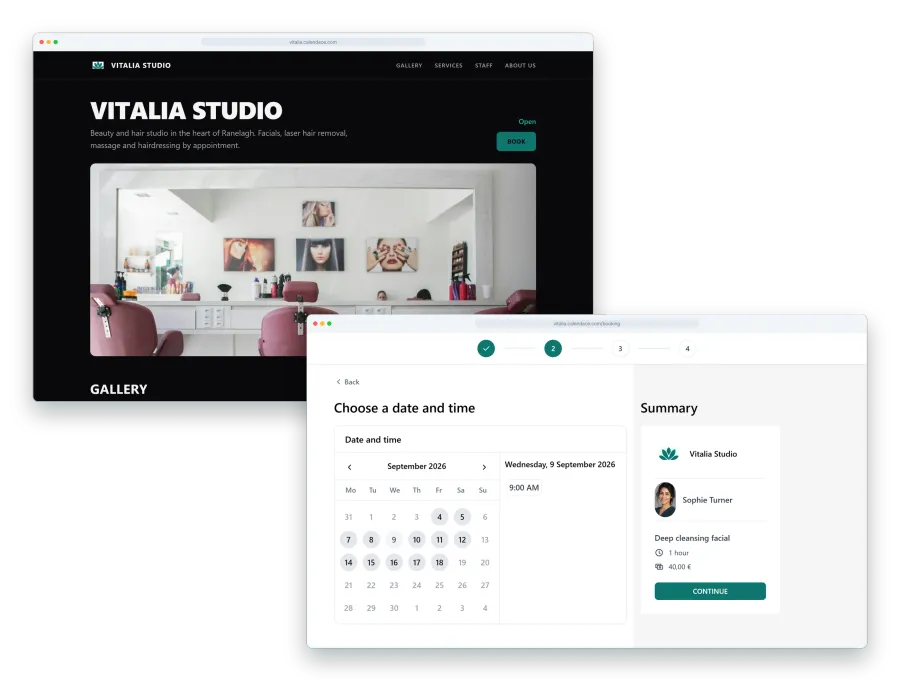
Against that, the cost of the page. The Calendace free plan gives 20 bookings a month with no card, enough to try it; the Standard plan is €12.99 a month (€9.99 paying yearly), with 600 bookings a month and no commission per appointment. The details are on the pricing page.
What the page doesn’t do, and it’s worth knowing: it doesn’t bring in new clients. Calendace is not a marketplace. Clients still find you on Google, on Instagram or through your QR; what changes is that when they find you, they book without calling, and you find out without stopping.
How to start without changing anything else
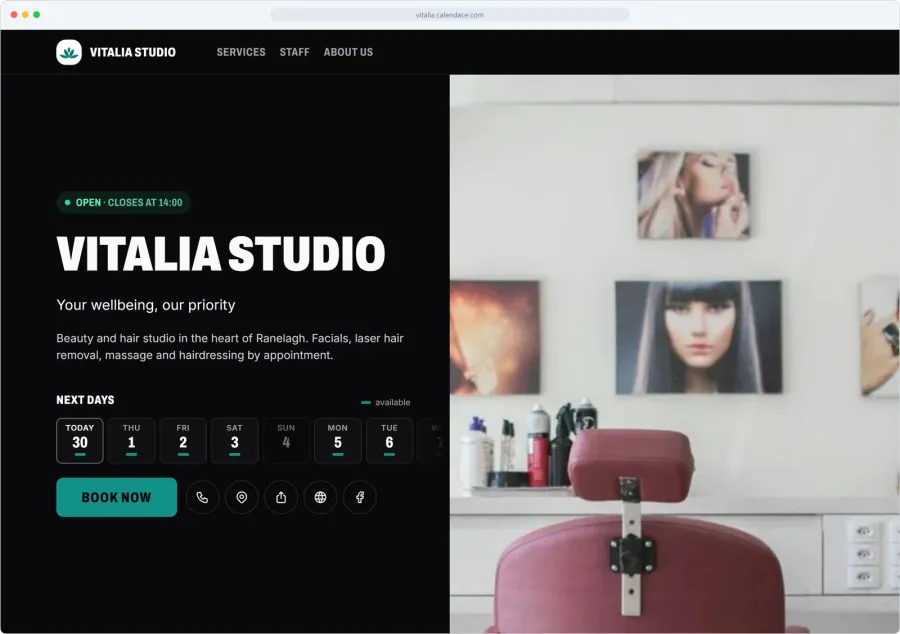
Don’t take the phone away. Put the booking link on your Google listing, in your Instagram bio and on a QR code at the desk, and when someone rings and books by phone, send them the confirmation with one extra line: “next time you can book here”. A share of your clients switches on their own. The rest keep calling, and you keep answering, only with half the interruptions.